
Bridge Strikes/Collisions are becoming rampant and drastically increasing every day. One of the most hit bridges in the UK is located in St John streets in Lichfield with over 90 being recorded since 2009. Also, last year Cambridge council recorded 18 HGV bridge hits in 12 months.
The railway suffers almost 2,000 bridge strikes every year costing the taxpayer some £23m in damages and delays.
The end of this month (October) sees a peak in the number of strikes, rising to almost 10 per day. Research suggests this could be due to the hour change and increased deliveries ahead of Christmas. Figures show most bridge strikes happen between 10 am and 11 am, but remain high all day until around 6 pm in the evening and can cause hours of travel chaos.
In the remainder of this article, we will be covering what a bridge strike is and how to prevent one from happening to you!
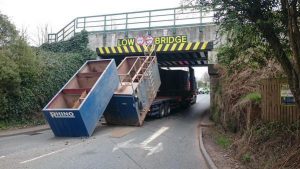
What Is A Bridge Strike?
A bridge strike is an incident whereby a vehicle and its load crash into a bridge. Lorries, double-decker bus, trailers or train are usually taller than the clearance underneath the structure as a result of over height thereby causing the collision with the bridges.
Bridge strike incidents have caused death and pain to people involved in rails and roads. Constructing and maintaining these bridges as well are usually expensive which makes the incidence of bridge hit to result in both the loss of many innocent lives and properties. We will be looking at some of its preventions in the next heading.
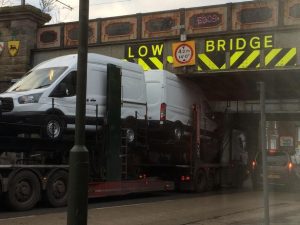
Prevention Of Bridge Strike
There are no perfect solutions for bridge strikes but they can be prevented. The following guides should be practiced in order to reduce the chances of it happening to you! We also cover this module in our HGV training programme.
HGV drivers are expected to:
- Know and master their route
- Know the height and width of their vehicle
- Always obey the traffics signs.
- Always check the security and safety of the load before commencing the journey.
- Check the height of your cab or trailer with its load and equipment before commencing the journey.
- You are not to depend on the details on the headboard as coupler dimensions can vary and do ensure to report any contrariety between the measured height and that displayed on the headboard to your Transport Manager.
Some Useful Precautions When En Route
- Always avoid shortcuts to save time as this may lead you to a low bridge.
- You are encouraged to make use of LGV specific satellite navigation system.
- The overall travelling height of your vehicle must not exceed 3 meters, and the correct maximum height must be displayed on your cab.
- Always get guides on an alternative route if you realise that your route is blocked by a bridge your vehicle is higher than or when you are redirected from your route.
- Never use a use a hand-held mobile phone or similar device while driving.
- You must stop and must not pass whenever the height of your vehicle is more than the dimensions shown on a circular traffic sign.
- Always slow down and probably sound your horn or use dipped headlights whenever you approach the bridge and only move to the centre of the road when you are sure it is safe to do so.
- Drivers of vehicles with wide loads over 3m are to be very careful when to get to arch bridges.
What should you do whenever a bridge strike occurs?
- You should update the police using the 999 system
- Report the bridge strike to the rail Authority immediately
- Ensure to Keep the people around you away and do not move your vehicle.
- Report the bridge strike immediately to your employer.
