
Drivers are the unsung heroes of the emergency services. Without a good driver, the skills of the paramedics, fire service or police wouldn’t be able to get to the places they’re needed in enough time to help. Paramedic drivers and ambulance drivers particularly are worth their weight in gold in the health service, and can literally save lives with their driving skills.
If you want to drive for a living and help as many people as possible, being a paramedic driver could be the job for you. We’ll break down everything you need to know before you decide whether to train up with us.
Who can become a paramedic driver?
In theory, anyone over 21 with a full UK driving licence can become a paramedic driver, and this is the basic requirement for the job. On a personal level, it also helps if you’re patient, keep a cool head in a crisis, and have excellent spatial awareness. A willingness to help people, and being a good team player, are also very valuable assets in the fast-paced world of emergency services.
What qualification you need?
To become a paramedic driver, you should have a qualification in emergency medicine if you want to be a paramedic too, but otherwise your driving licence and some basic GCSEs is all you need by way of qualifications. You’d then be expected to undertake one of our specialist training course.
What courses and certification do you need?
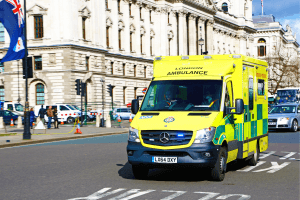
To become a paramedic driver, there are two different career routes you can take – emergency or non-emergency ambulance driving work. In practical terms, this means the course you do is dictated by which sort of ambulance vehicle you want to drive.
- With an LGV Cat C1 licence you can drive any ambulance or other vehicle weighing between 3500kg and 7500kg – a standard emergency ambulance.
- With your PCV Cat D1 licence you can carry 8 passengers, and this means you can drive the sort of vehicle you might need for doing non-emergency work where you carry multiple passengers at a time.
As part of each intensive course you’d need to take CPC, theory test & practical test after you have completed your practical training, but if you got your driving licence before 1997 you only need to learn the advanced section of the course. This is because your licence already includes the C1 category training you need. If you got your licence after 1997, you’ll need to train in a basic C1 category first, and then move into more specialist training to get your ambulance credentials.
Your training includes:
- Driving theory. The theory test is a crucial part of your category C1 licence and you’ll need to pass this before you can move on to practical learning.
- Driving skills. All the practical and hands-on parts of learning to drive an ambulance are covered in this section of your training.
- CPC training. The CPC (Certificate of Professional Competence training) is necessary to make sure you’re ready for the professional world of driving an ambulance for a living.
As part of your training, you also get:
- A medical test, you can either select the GP from our approved list or you can contact your own local GP.
- Provisional licence application organised by our own staff once you have passed your medical test.
- Access to our online Theory Training Site with all the material you need to study and practice before the actual theory test.
- DSA theory test booking – this is our online portal where you can take unlimited practice test.
- A driver training pack – Starter pack with all the information and guide for your reference.
- Practical training course (available 365 days a year)
- Practical test booking – Our Staff will get the dates booked based on your availability.
Most available jobs locations in the UK ?
Paramedic and ambulance driver jobs are available all over the UK, but you’ll generally find that the higher the population, the more jobs there are. This means that, while London is a great bet for finding paramedic driving jobs, really any major city is going to have a number of jobs for drivers at any given time.
What kind of salary can you earn?
The start salary for ambulance drivers is anything from £17,000 to £19,000 per annum, rising to around £25,000 if you’re also a qualified paramedic.
What sort of career progression is available?
It’s possible to go from being a non-emergency driver, through to be an emergency driver and technician, right the way through to being a fully-fledged paramedic with live-saving skills of your own. The NHS is always open to advancing your career opportunities and developing more skilled staff, so there’s no need to stop learning once you’ve got your first non-emergency job.
What should you do next?
If you like the sound of being a paramedic driver, look no further than HGVT. Call us on 08000315765 . We have training and support staff who can see you through every step of the way, from registering right through to your first job. We run courses for just £10 deposit, so contact us today for an affordable way to start your new career as a paramedic driver.
