
You may already know how to transport horses from a practical standpoint. If so, that’s great. But are you familiar with your options to transport them safely and legally in the UK? We ask because there is a big difference between practical horse transport and moving the animals in a way that is both legal and safe. If you don’t know the legal and safety implications of horse transport, you should make a point of learning before your next journey.
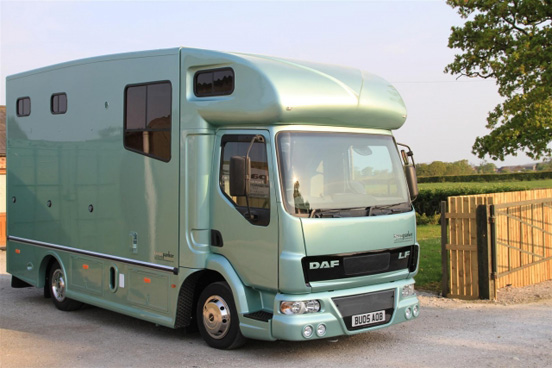
In this guide, we will deal with both the legality of horse transport and how to do it safely. We will discuss things such as licencing, tow vehicle and trailer weights and taking the necessary steps to ensure horses are safe. You should have a working knowledge of what safe and legal horse transport looks like by the time you finish reading. We will start with licencing issues.
Licence Requirements for Horse Transport
It is not legal for most drivers in the UK to drive an HGV horsebox or tow a horsebox trailer without an additional entitlement or a new licence altogether. The appropriate licence for you depends on the kind of vehicle you drive and the size and weights involved. First on the list is the standard Category B licence.
The rules were changed in 1997 to account for tow vehicles of up to 3.5 tonnes towing trailers in excess of 750 kg. Any driver who had already obtained a Category B licence prior to January 1 of that year was allowed to continue towing trailers within the restricted weight limits without the need for an additional licence. Everyone else had to get a new licence. The licences we deal with most frequently today are as follows:
- Category B+E – A Category B+E licence entitles you to drive a tow vehicle as heavy as 7.5 tonnes while towing a trailer in excess of 750 kg. These limits are usually acceptable for single horse trailers and tow vehicles no larger than the standard SUV or pickup truck.
- Category C1+E – This licence is the favourite among horse owners who use larger trailers to carry multiple animals simultaneously. It allows for tow vehicles heavier than 7.5 tonnes and trailers in excess of 750 kg, as long as the two together do not exceed 12 tonnes.
- Category C – The Category C licence is reserved for the largest of horsebox trailers and HGV horseboxes. If you are required to obtain this licence in order to safely and legally transport horses, you may also need a Driver CPC card. More on that later.
As you can see, there is more to remaining legal than simply learning how to transport horses practically. There are definite requirements that need to be followed in terms of licencing. In order to obtain the licence you need, you will have to take and pass the trailer test. It is a two-part test involving both driving skills and practical demonstration.
Determining Your Status as a Driver
Your average horse owner who routinely participates in shows and training events will know how to transport horses safely after having done it a few times. But again, there may be additional legal concerns to worry about. For example, do you know what your driver status is? You need to know just in case there are additional licencing requirements.
If you are a horse owner transporting your animals solely for recreational and hobby purposes, you are an amateur and will only need the appropriate licence from the list above. You may still derive some financial gain from your horse-related activities as an amateur, but the total amount you earn in a year cannot exceed an amount the government would consider a significant portion of your annual income.
If you earn most of your income from horse-related activities, including being a salaried driver working for another horse owner, you may need Driver CPC training and certification in addition to your licence. This requirement most often relates to drivers who have one of the Category C licences. Driver CPC training is intended for professional drivers who operate larger vehicles on public roads. Make sure you know your CPC status by knowing and understanding your status as a driver.
Lastly, you may also need an operator’s licence if your horse-related activities constitute a business enterprise. The government publishes a complete guide explaining all of this, including driver status. You can download the document free of charge from the GOV.UK website.
Maintaining the Safety of Horses
Learning how to transport horses also involves learning to maintain their safety. Once again, government regulations require horse owners and their authorised agents to ensure the health and welfare of any animals in transit. The regulations apply as much to horse owners as they do to farmers.
There is a grey area in these regulations pertaining to amateur horse owners. As stated on the GOV.UK website, the regulations apply to those transporting animals in connection with ‘economic activity’. Unfortunately, they don’t go so far as to define what economic activity is. Does it relate to any horse transport the results and financial remuneration, or is limited solely to those who transport animals as part of an established, full-time business?
We recommend horse owners assume the regulations apply to them even if they don’t. Learning how to transport horses in line with the regulations guarantees horse owners will not be found out of compliance in the event they are ever questioned by the authorities. It’s a ‘better safe than sorry’ kind of thing.
What is involved in maintaining horse safety? According to the regulations, it involves:
- maintaining equipment in good working order
- maintaining proper loading and unloading facilities to reduce injury risks
- ensuring the competence of all animal handlers
- providing sufficient floor and roof space for animals
- providing food, water, and rest as needed
- keeping journeys as short as possible
- ensuring animals are physically fit for travel.
All of these areas are covered in training programmes designed to provide Driver CPC training for those who need it. It may or may not be included in basic training for taking the car and trailer test. We advise all horse owners undergo whatever training is necessary to make them familiar with these concepts.
Receiving Your Training through Us
Despite our name, the HGV Training Centre does run classes to prepare students to take and pass the trailer test. We can teach you how to transport horses safely and legally regardless of your status as a driver or horse owner. We have three-day courses for experienced drivers as well as five-day courses for those who have never towed a trailer of any kind. Each of the courses culminates with an appropriate exam.

If you have any questions about licencing requirements, you are welcome to call us. We will answer your questions as well as walk you through the process of enrolling in one of our training courses. We promise to make the process as easy as possible from start to finish. Should you decide to train with us, you will be training with the leading provider of commercial and non-commercial driver training in the UK.
We offer more than four dozen convenient locations for you to choose from. And because new classes are forming all the time, there is no need for you to wait for months on end just to learn how to transport horses safely and legally. You can get started just as soon as you contact us.
Find out more about how we could help you
To learn more about UK driving licence laws our Intensive Horse Transportation Training Courses please find a selection of related articles below:
- What Licence Do I Need To Drive a 3.5 Tonne Horsebox?
- Find the Best Driver Training for HGV Horseboxes
- Find the Best Horse Box Trailer Towing Courses in Your Area
- Horse Lorry Types and UK Driving Licence Requirements
- The Best Intensive Training Course on Horse Trailer Towing
- The Easy Guide to Horse Transport Options in the UK
- The Simple Low Cost Solution to Getting Your Horsebox Licence
- How to Transport Horses Safely and Legally in the UK
- What Are The Licence Requirements For Towing A Horse Trailer?
- What You Need To Know About Towing Horse Trailers
